
Identify the plant and part.
Use the botanical name and specify the part used, such as root, leaf or fruit. A common name alone can leave an important ingredient decision open.
A more precise brief for sourcing.
Private label herbal extract capsule supplements
For brands building a herbal product, with ingredient sourcing, capsule filling and packaging at TS LAB in Slovenia. Bring your concept, extract specification or existing formula. Define the material, serving and pack before moving into production.
In the catalog: herbs and botanicals, mushrooms and ready formulas.
Have a product idea, but no specification yet? Start there.
Start with what you have
Tell us which botanicals you want to use, how you want to pack the capsules and where you will sell them. Send a supplier specification or existing formula if you have one.
Include the quantity you have in mind so the offer covers the product, packaging and work you need.
Start my herbal capsule briefOne herb name. Several material choices.
A familiar botanical name can describe different plant parts, preparations and supplier grades. Make those choices explicit so you can compare the product you will actually buy.
Use the botanical name and specify the part used, such as root, leaf or fruit. A common name alone can leave an important ingredient decision open.
A more precise brief for sourcing.
Record whether you need a whole powder or an extract preparation. For an extract, include the supplier grade, relevant extraction information and any added carriers.
Compare materials on the same basis.
Include any required marker content and the relevant test specification. An extract ratio does not replace the material’s composition, identity and supplier documents.
Keep the agreed grade clear for the order.
A higher extract ratio is not a complete quality score. Record the extraction solvent and what the ratio compares, including whether it refers to native extract or the supplied preparation.
Read the specification · worked example
The powder you buy can include both native extract and a carrier. A marker percentage measures a named constituent within the material.
Hypothetical inputs: 250 mg preparation, 80% native extract, 20% carrier and a 5% marker measured on the supplied preparation. These explain the calculation; they are not a TS LAB formula or a recommended serving.
The marker is already within the preparation. It is not another 12.5 mg to add to the fill.
Check the percentage basis. A marker stated on the native extract would use a different calculation. Capsule fit still needs the complete blend and its physical properties.
Terminology reference: EMA’s definitions of native extract and extract preparations. This herbal-medicine guidance is used for terminology, not as a food-supplement labelling rule.
Powder or extract?
Neither description tells the whole story. The useful comparison is between the actual material specifications and what each means for your capsule formula.
| The decision | Whole botanical powderThe specified plant part, milled | Extract preparationA defined extract and its composition |
|---|---|---|
| Material identity | Botanical name, plant part and powder specification. | Botanical name, plant part, extraction information and supplier grade. |
| Composition | Review the actual material specification and any relevant constituent limits. | Review any declared markers, extract content, carriers and other added components. |
| Capsule serving | Assess the proposed amount and the powder’s volume and filling behaviour. | Assess the amount of the complete preparation, including carriers, and its filling behaviour. |
| Meaningful cost comparison | Compare the cost for the intended serving, capsule count and finished pack. | Use the same basis, while accounting for differences in grade and composition. |
Already have a supplier specification? Send it with the formula so the discussion starts from the actual material.
From material to finished pack
The amount of an extract preparation can differ from its declared marker amount. The full formula, carriers, excipients and blend properties all affect the material that needs to fit inside the capsule.
Explore the capsule fit assessmentList each botanical preparation, its amount and any other ingredients per serving.
Assess material properties, proposed capsule count and shell requirements together.
Set the capsule count per jar or blister, then confirm components and labelling needs.
A manufacturing partner around the product
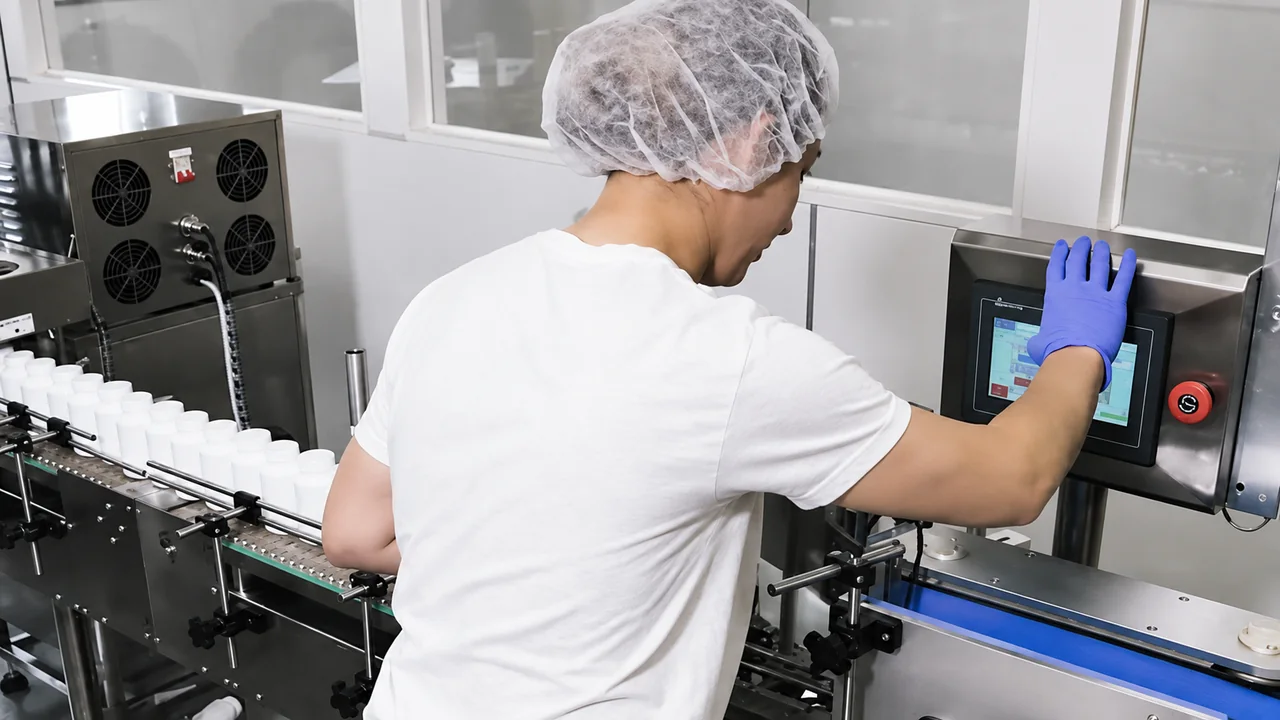
TS LAB sources ingredients, fills capsules and packs the finished product in Komenda. Bring those steps together in one brief, with the target countries and label requirements included.
For your chosen material, agree which supplier documents are required and whether additional testing is included. Keep the testing scope and document requirements clear in the offer.
Compare the complete offer
Put the material, finished serving and included work side by side. That makes differences in a quoted price easier to understand.
Evidence appropriate to the species and preparation. Processing can limit what a DNA test detects.
The named constituent, percentage basis, analytical method and agreed limits. A marker result alone does not establish a product benefit.
The results and limits appropriate to this material and intended market. One assay does not answer every quality question.
Scope reference: EFSA’s botanical safety-assessment guidance. For processing and DNA limitations, see Ivanova et al., 2016. These are questions to agree for your project, not a claim that a fixed testing panel is included.
Before you enquire
Practical answers for choosing the material and preparing your brief.
Send the botanical name and plant part, supplier grade or specification, amount per serving, full formula and target markets. Include your preferred pack and order quantity. If these are undecided, describe your product idea and what you already know.
No. The preparation, composition, added carriers and relevant test specification also matter. Compare two materials using their actual supplier documents. A similar herb name or ratio does not by itself establish equivalent composition or suitability for your product.
No. An analytical marker can be selected for measuring and controlling a material without establishing a health benefit. Check the named constituent, method and percentage basis; any proposed health claim needs separate evidence and a review for the target market.
Terminology: EMA’s herbal-medicine quality guideline, revision 3.
No single approach suits every preparation. DNA can be degraded during processing, so a failure to detect it does not by itself show that the botanical is absent. Chemical analysis answers other questions about composition. Agree identity evidence and methods suited to the actual material.
Research: Ivanova et al., 2016 assessed 15 selected supplements. This analytical study illustrates method limitations; it does not verify TS LAB materials.
Share the complete formula, current ingredient specifications and packaging requirements for assessment. Matching a botanical name alone is not enough to match an extract grade. The proposed materials and production scope need to be agreed before an equivalent finished product can be confirmed. See how a manufacturing transfer is prepared.
Do not assume this from the ingredient name or factory location. The botanical preparation and intended markets need review, including any applicable novel food status and national requirements. Agree the regulatory work and responsibilities for your project. Explore regulatory support.
Reference: EFSA on botanicals and the European Commission’s Novel Food status Catalogue.
Your herbal capsule project
Send your botanical concept, formula or specification. Start with what you know.